The Long Docket
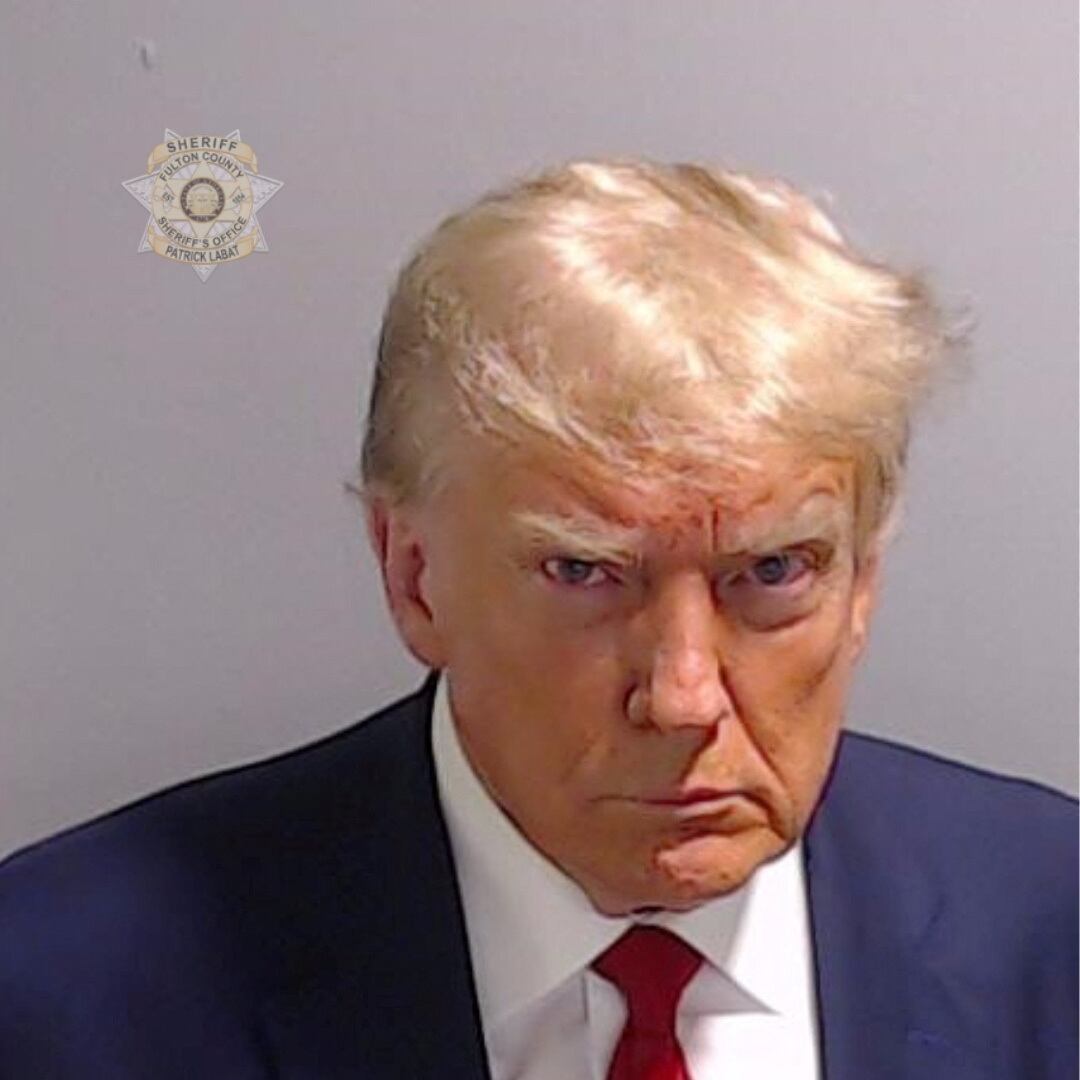
Fifty-three years. 3,500 lawsuits. Six bankruptcies. Thirty-four felony convictions. And not one of the four indictments died because a jury said no.
That photograph is exactly three years old today. It is the only mug shot ever taken of an American president, and the case that produced it was dismissed in its entirety nine months ago.
That sentence is this whole page in miniature. There is an enormous amount of smoke, a genuinely large amount of fire, and a startling gap between the two — a gap that has less to do with innocence than with timing, doctrine, and who ended up holding the office that decides who gets charged.
Ground Rules
A complete list is not possible. USA TODAY counted at least 3,500 legal actions involving Trump and his businesses across 30 years — roughly 1,900 as plaintiff, 1,450 as defendant. That is more litigation than any presidential candidate in American history by an order of magnitude. This covers the significant matters, not all 3,500. Anyone claiming the complete list is selling something.
Charged is not convicted. Alleged is not charged. Every entry below carries a tag. A case dismissed on a technicality is not an acquittal, and this page says which one happened. That matters: the loose version of this list, the one that circulates as a meme, is worse than useless. Inflate it and the true parts get thrown out with the invented ones.
Bankruptcies are not crimes. All six were corporate Chapter 11 reorganisations. Trump has never filed personal bankruptcy and he is right to correct people who say he has. They are here because they are part of the record, not because they are offences.
1970s
The federal government's first case against himUnited States v. Fred C. Trump, Donald Trump & Trump Management
The Justice Department sued the Trumps in the Eastern District of New York for violating the Fair Housing Act — refusing to rent to Black applicants, misrepresenting which units were available, steering Black tenants into a handful of buildings. Testimony described applications from Black applicants marked with a “C” for “colored.” Donald Trump was 27 and president of the company.
Represented by Roy Cohn, the Trumps countersued the United States government for $100 million for defamation. The countersuit was thrown out.
DOJ returns to court over the decree
The government went back to the judge alleging the Trumps had not complied. The decree was eventually allowed to lapse.
1980s
Trump Tower, and a case that ran sixteen yearsThe Polish Brigade
Roughly 200 undocumented Polish labourers demolished the old Bonwit Teller building to clear the site for Trump Tower. Twelve-hour shifts, seven days a week, about $4 to $5 an hour — when they were paid at all — largely without hard hats.
Suit filed 1983 by a dissident member of House Wreckers Local 95. It ran for sixteen years. In 1991 the court found Trump liable in a conspiracy to avoid paying union pension and welfare contributions for those workers.
USFL v. National Football League
Trump owned the New Jersey Generals and drove the United States Football League into an antitrust suit against the NFL. The jury agreed the NFL held a monopoly. It then awarded damages of one dollar, trebled by statute to three.
1990s
The collapse — four bankruptcies in twenty-three months
Personal insolvency, narrowly avoided
Trump's businesses carried roughly $3.4 billion in debt, of which he had personally guaranteed about $900 million. His banks decided he was worth more to them alive than dead, restructured everything, and reportedly put him on a personal allowance of around $450,000 a month.
The $3.5 million chip run
With a Taj Mahal bond payment due, Fred Trump sent a lawyer to buy $3.5 million in casino chips and walk out without gambling. Under New Jersey law that is an unapproved loan.
The Chapter 11 ledger
What followed was the most concentrated run of corporate insolvency in modern American real estate.
| # | Filed | Entity | What he gave up |
|---|---|---|---|
| 1 | Jul 1991 | Trump Taj Mahal | Half his equity |
| 2 | Mar 1992 | Trump Castle | 50% stake |
| 3 | 1992 | Trump Plaza Hotel & Casino | 49% stake |
| 4 | Nov 1992 | The Plaza Hotel, New York | 49% to lenders |
| 5 | Nov 2004 | Trump Hotels & Casino Resorts | 47% → 27% |
| 6 | Feb 2009 | Trump Entertainment Resorts | Board seat; stake to ~10% |
None were crimes and none were personal. The fair counter-point is simply that no other major American developer has used Chapter 11 this many times.
First federal money-laundering penalty
FinCEN assessed $477,700 against Trump Taj Mahal for currency transaction reporting violations. It would not be the last.
2000s
A record lobbying fine, and a libel suit he lostThe covert campaign against the Mohawk casino
To block a competing casino, Trump secretly financed newspaper advertisements attacking the St. Regis Mohawk tribe — routing the money through a front group so it could not be traced to him. The ads linked the tribe to crime and drugs.
Trump v. Timothy O'Brien
Trump sued the author of TrumpNation for $5 billion over its reporting that his net worth was between $150 and $250 million. In deposition he conceded his stated net worth fluctuated with “my own feelings.”
2010s
Trump University, the Foundation, and a record casino fineFinCEN fines Trump Taj Mahal $10 million
The largest penalty ever levied against a casino at the time. The Taj admitted it had willfully violated the Bank Secrecy Act's reporting and recordkeeping requirements from 2010 to 2012, with examiners citing a history of violations reaching back to 2003.
Trump University — three fraud cases
Two California class actions and a $40 million suit by the New York Attorney General, who called it a “bait and switch” run by an unlicensed school. Students paid up to $35,000 for mentorships; internal playbooks instructed salespeople to press prospects on their finances.
The Donald J. Trump Foundation
The New York Attorney General sued over “persistently illegal conduct” — using charity money to settle his businesses' legal disputes, to buy portraits of himself, and to support his 2016 campaign. The Foundation agreed to dissolve in December 2018.
The Mueller investigation
The Special Counsel did not establish a criminal conspiracy with Russia and brought no charges against Trump. On obstruction it laid out ten episodes and pointedly declined to exonerate him, citing the policy against indicting a sitting president.
2020–2024
Four indictments, and the first felony conviction of a US presidentThe Trump Organization is convicted
This one gets forgotten and it shouldn't. The Trump Corporation and Trump Payroll Corporation were found guilty on 17 felony counts — criminal tax fraud, conspiracy, falsifying business records — over a fifteen-year scheme paying executives in untaxed perks. The first criminal conviction of Trump's companies in their history. Trump himself was not charged.
Carroll I — sexual abuse and defamation
A federal jury found Trump liable for sexually abusing E. Jean Carroll in a Bergdorf Goodman dressing room in the mid-1990s, and for defaming her. The jury did not find the assault met New York's unusually narrow legal definition of rape; the judge afterwards noted the finding covered rape “as many people commonly understand the word.”
Carroll II — $83.3 million
Because he kept defaming her, a second jury assessed damages again: $18.3 million compensatory and $65 million punitive.
New York civil fraud — and the twist
Justice Arthur Engoron found Trump, his sons and the Trump Organization liable for a decade of fraudulently inflating asset values to obtain better loan and insurance terms — including valuing his own Trump Tower triplex at nearly three times its actual square footage. Judgment: about $355 million, growing with interest to roughly $454 million, plus a three-year ban on serving as an officer or director of any New York company.
Indicted four times in five months
I. New York — hush money
Manhattan DA Alvin Bragg charged 34 counts of falsifying business records in the first degree, over reimbursements to Michael Cohen for a $130,000 payment to Stormy Daniels before the 2016 election.
II. Florida — classified documents
Special Counsel Jack Smith charged willful retention of national defense information under the Espionage Act, conspiracy to obstruct justice, and false statements, over classified material kept at Mar-a-Lago. Superseded in July to 40 counts.
III. Washington D.C. — 2020 election interference
Four counts: conspiracy to defraud the United States, conspiracy to obstruct an official proceeding, obstruction of an official proceeding, and conspiracy against rights.
IV. Georgia — RICO
Fulton County DA Fani Willis brought a 41-count racketeering indictment naming 19 defendants, over the pressure campaign on Georgia officials — including the call asking Secretary of State Brad Raffensperger to “find 11,780 votes.” This is the case that produced the photograph at the top of this page.
Trump v. United States — the ruling that changed everything
The Supreme Court held 6–3 that former presidents have absolute immunity for core constitutional acts, presumptive immunity for other official acts, and none for unofficial acts — and that evidence of official acts cannot be used even when prosecuting unofficial conduct.
Every case still breathing at that moment was reshaped by it. It is the single most consequential item on this page, and it is not a scandal, a charge, or an allegation. It is the law.
2025–2026
In office — where the cases went, and what replaced them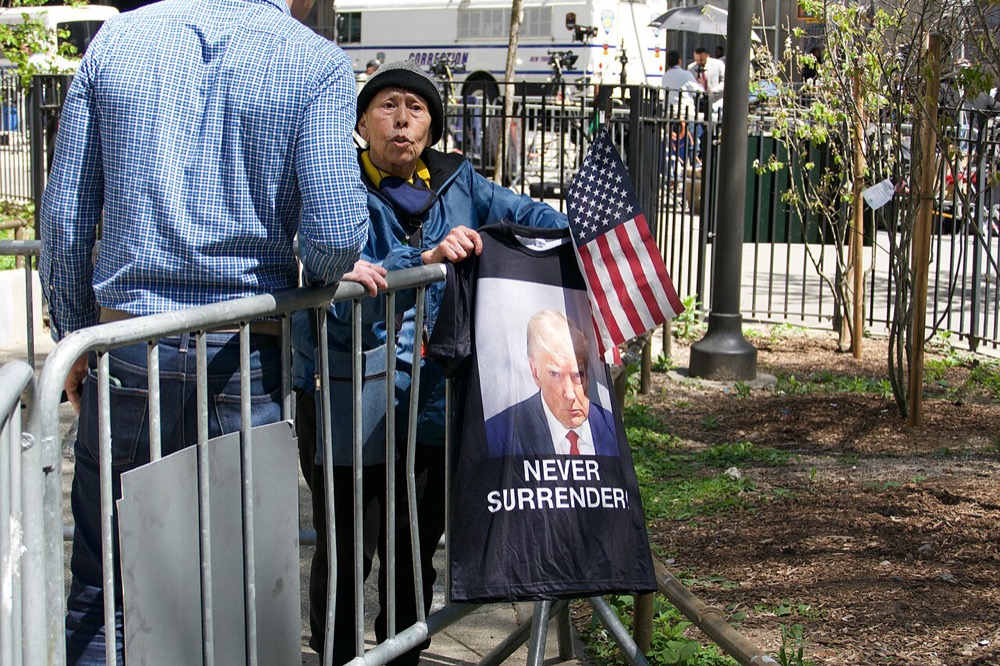
The Epstein files
The Justice Department released documents including FBI interview notes with a woman who alleges she was assaulted by Trump while a minor in the 1980s. NPR reported the department had initially withheld Trump-related material. FBI agents marked most allegations in that tranche unverifiable or not credible. No charges have been brought. Trump denies all of it.
500+ challenges to administration action
The legal centre of gravity shifted from Trump personally to his government. Just Security's tracker follows 500+ cases; where courts have ruled, challengers have won about 60% — roughly 119 to 79. CNN identified 77 rulings containing sharp judicial criticism; Reuters counted 75 finding First Amendment violations. In April 2025 Judge James Boasberg found probable cause for criminal contempt over the El Salvador deportation flights — a finding an appeals court vacated that August.
Allegations, not charges
The material that never became a case
This is separate on purpose. None of it has been proven, and a list that blurs the line is a list nobody has to take seriously.
Sexual misconduct. Roughly two dozen women have publicly accused Trump of conduct ranging from unwanted kissing to assault. Exactly one of those claims was ever tested by a jury — Carroll's — and it succeeded. Four accusers, Alva Johnson, Natasha Stoynoff, Karena Virginia and Amy Dorris, signed the Epstein survivors' 2026 letter to Congress.
Inheritance tax schemes. A 2018 New York Times investigation concluded Trump received the equivalent of over $413 million from his father's empire, partly through what it called “dubious tax schemes… including instances of outright fraud.” No charges followed — the conduct was decades past the statute of limitations.
Obstruction of justice. Mueller's ten episodes were never charged and never tested.
“How many crimes has he committed since taking office?”
I get asked this, and the honest answer is that there is no number, and anybody who gives you one is making it up. Here is exactly why.
- Only courts decide what is a crime. “Crimes committed” is not a countable thing. Charges and convictions are. Everything else is opinion with a number stapled to it.
- A sitting president does not get federally prosecuted. That is longstanding Justice Department policy — and it is the stated reason Jack Smith dropped both federal cases, not any finding about the strength of the evidence.
- Official acts are now largely immune, per Trump v. United States.
- He runs the department that would charge him.
So the count of criminal charges against him personally since 20 January 2025 is zero — and that figure describes the structure of the office, not the conduct of the man.
What can actually be counted- 34 felony convictions still on his record. None expunged.
- ~119 rulings where challengers beat the administration in court — of roughly 198 decided, from 500+ tracked. Challengers win about 60% of the time.
- 77 rulings containing sharp judicial criticism of the administration (CNN review).
- 75 rulings finding his government violated First Amendment rights (Reuters count).
- 1 probable-cause finding of criminal contempt — Boasberg, April 2025 — vacated on appeal that August.
That is not “crimes committed.” It is how often courts have found his government acted unlawfully — a real number, from real dockets, still climbing.
What the record actually shows
Strip out the noise and you are left with this. A man found liable for housing discrimination, for stiffing undocumented labourers, for sexual abuse, for defamation twice, for charity fraud, and for a decade of business fraud. Whose companies were convicted of 17 felonies. Who was personally convicted of 34. Who has been fined by casino regulators, by lobbying regulators, and twice by the Treasury's financial crimes bureau.
And who is currently President of the United States, having received no penalty whatsoever for the only criminal case that ever reached a jury.
Three of the four indictments died without a verdict. Not one of them died because twelve people looked at the evidence and said no.
That distinction is the whole ballgame, and it is the one thing worth taking away from this page.
Sources
- USA TODAY — the 3,500-lawsuit analysis (2016)
- Civil Rights Litigation Clearinghouse — United States v. Fred C. Trump, Donald Trump & Trump Management (E.D.N.Y. 1973)
- TIME — the $1.375M undocumented-workers settlement
- FinCEN — $10 million penalty against Trump Taj Mahal (2015)
- NBC News — Trump University $25M settlement approved
- NPR — $2M judgment over Trump Foundation funds
- CNN — Trump Organization fined $1.6M after 17 felony convictions
- Ballotpedia — the four indictments, counts and status
- CNBC — NY appeals court voids the civil fraud penalty (21 Aug 2025)
- Georgia Recorder — Fulton County case dismissed (26 Nov 2025)
- NBC News — Second Circuit upholds Carroll's $83.3M
- SCOTUSblog — Trump petitions the Supreme Court over Carroll (28 Jul 2026)
- Just Security — Trump Administration Litigation Tracker
- CNN — 77 rulings with sharp judicial criticism
- NPR — DOJ withheld Epstein files relating to Trump accusations