She Called For Help
Sean Grayson died in prison on Sunday. This post is not about him.
He was 32. He had Stage 4 colon cancer. He was six months into a twenty-year sentence for killing a woman who called the police for help. Some people will want to talk about that today, and about what we are supposed to feel.
I want to talk about Sonya Massey instead. She is the one who should still be here.
Sonya first
She was born on 1 February 1988 in Springfield, Illinois. She was 36 when she died.
She was the mother of two children, Malachi and Jeanette. She was one of four sisters — her youngest sister called her the middle man, the one who held the others together. She was a devout Christian. She cooked. She did hair. Her days were work, then home to feed her kids.
State Senator Doris Turner, who had known her since she was a child, described her as “a very petite woman, quiet, soft-spoken… just very, very friendly. Not combative at all.”
Her son Malachi said this about his mother:
“Loving, caring. She was just a ball of energy. She could talk to anybody. She was a lovable person. She always helped people.”
And there is one more thing about Sonya Massey that you should sit with, because it is almost too much to believe.
She was a descendant of William Donnegan — an 84-year-old retired Black cobbler who, in his working life, had made shoes for Abraham Lincoln.
During the Springfield Race Riot of 1908, a white mob broke into Donnegan's home, beat him, cut his throat and hanged him from a tree in the schoolyard next door. His offence, in the eyes of that mob, was that he had been married to a white woman for more than thirty years. Soldiers found him the following morning still alive. He died in hospital on 16 August 1908. The outrage over that riot helped bring the NAACP into existence.
One hundred and sixteen years later, in the same city, his descendant opened her door to a man with a badge and a gun, and did not survive the encounter either.
What happened on 6 July 2024
Just before 1 a.m., Sonya Massey called 911. She thought there was a prowler outside her home near Springfield. That is the entire reason any of this happened: she was frightened, and she did what you are told to do.
Two Sangamon County sheriff's deputies came. They looked around outside, found nothing, and came inside to take her details. There was a pot of water heating on her stove.
Deputy Sean Grayson pointed at it and told her to deal with it. She moved the pot, and as she did she said, quietly, “I rebuke you in the name of Jesus.”
It is a prayer. It is a thing a frightened, devout woman says. Grayson — standing on the other side of a kitchen counter — put his hand on his 9mm and answered:
“You better f---ing not or I swear to God I'll f---ing shoot you in your f---ing face.”
She ducked behind the counter. She said “I'm sorry.”
He shot her three times. One round hit her below the left eye.
Then he did not render aid. His partner moved to get a medical kit and Grayson told him not to bother, saying she was already gone.
The part that decides everything
She was in her own kitchen. She had committed no crime. She was not armed — a pot of water is not a weapon in the hands of a woman who is moving it because a deputy told her to. She had called them. She was the person asking for protection.
From the moment they arrived to the moment he fired was a matter of minutes. She never threatened anyone. There was no provocation, because there was nothing to be provoked by.
Then he lied
This is the part that matters most, and it is the reason no one owes this man a soft obituary.
Grayson filed a report. In it he wrote that he feared bodily harm, because Sonya Massey was coming at him with a pot of boiling water.
His own body camera shows otherwise. The footage shows him telling her to walk away from the water, and shows her moving it to the sink. It shows a woman crouching, apologising, and praying. It does not show an attack, because there was not one.
He wore the camera that caught him. He wrote the lie anyway.
And then, at trial, the most damning witness against him turned out to be the other deputy who was standing right there. Dawson Farley testified that he was never afraid of Sonya Massey. He testified that what frightened him that night was Grayson.
The system that put him in her kitchen
Sean Grayson should never have been wearing that uniform, and that is not hindsight. It was all on paper before he ever set foot in her house.
- Six law enforcement agencies in four years — Pawnee, Kincaid, Virden, Auburn, Logan County, then Sangamon County. The pattern has a name in policing research: a wandering officer.
- Two DUI convictions, in August 2015 and July 2016. He pleaded guilty both times.
- Discharged from the Army for serious misconduct.
- A record that had already prompted an employer to send him to classes on making decisions under high stress.
Sangamon County ran a background check before hiring him. Its position afterwards was that prior DUI convictions “are not disqualifying criteria for a deputy.”
Sonya Massey did not get to review his file before she dialled 911. She just got him.
The trial
Grayson was fired and charged with three counts of first-degree murder, aggravated battery with a firearm, and official misconduct.
In October 2025 a jury acquitted him of first-degree murder and convicted him of second-degree murder — a verdict that turns on the jury accepting he held an unreasonable belief that he was in danger. In January 2026 he was sentenced to 20 years, the maximum available for that conviction. The judge took his cancer into account in imposing it.
What actually happened at the end
I want to be accurate here, because the accurate version is bad enough and because getting it wrong would insult the woman this post is for.
In July 2026 Grayson applied for early medical release under the Joe Coleman Act, which covers prisoners who are terminally ill. His application said he had advanced colon cancer. That was true. He had been diagnosed at Stage 3 in 2023; it had reached Stage 4 and spread to his liver, lungs and rectum.
The Illinois Prisoner Review Board denied him 3–0 on 31 July. Sonya's family opposed the release. So did the prosecutor, on the grounds that the sentencing judge had already weighed his illness when handing down the twenty years.
He died on 23 August 2026, three weeks later.
So here is the shape of this man's life, laid out plainly. The one time he told the truth about his own circumstances, it was in an attempt to get out of the punishment for killing someone — and the board said no, because a judge had already accounted for it. He lied when a woman's life depended on the truth. He was honest when his own freedom depended on it.
What Sonya left behind
Her family did not just grieve. They went and changed the law.
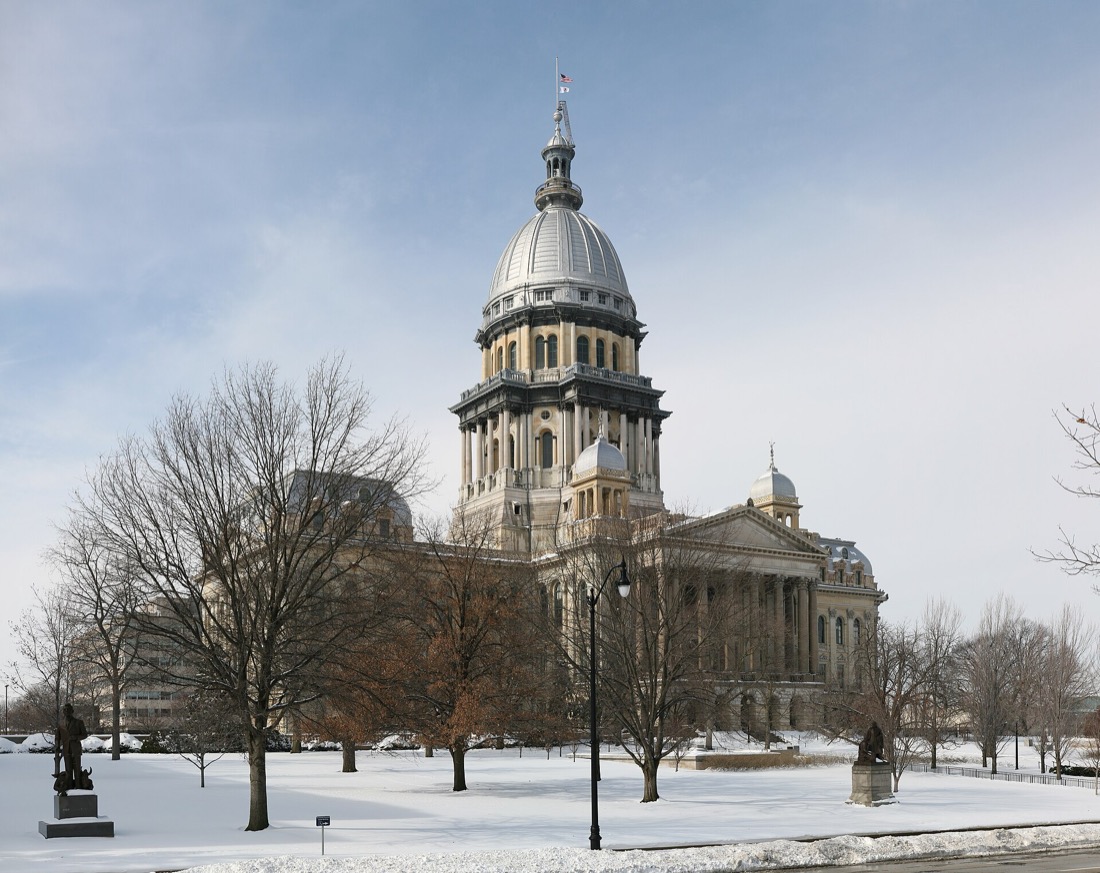
The Sonya Massey Act — Public Act 104-0158 — was signed by Governor JB Pritzker and took effect on 1 January 2026. It rewrites how Illinois hires police: agencies must now carry out a comprehensive review of an applicant's full employment history, including personnel records from previous departments, before making an offer. It exists precisely so that the next Sean Grayson cannot wander from department to department with his file left behind him.
On what would have been her 37th birthday, her family announced a $10 million wrongful death settlement with Sangamon County. Her attorney called it bittersweet, which is the only honest word for money paid in place of a mother.
Her mother Donna has said: “I don't think I've seen one day since the day she died that I haven't cried.”
The family's grace, and mine
When Grayson died, the family's attorneys, Ben Crump and Antonio Romanucci, put out a statement. It is more gracious than most of us could manage:
“Sonya Massey's death was unjustifiable and she should be alive today. Sean Grayson's death in custody from cancer does not bring Sonya back. We wish his family prayers of peace, as we do for all who grieve a loved one. Sonya's family knows that pain all too well and will grieve her loss the rest of their days.”
That is the family of the murdered woman extending sympathy to the family of the man who murdered her. They have every right to that grace. It costs them something to give it, and it is theirs to give.
I am not the family. I am not obligated to that grace, and I am not going to perform it.
Do not be sad for Sean Grayson. Celebrate Sonya Massey.
Celebrate a woman who raised two children, who fed people, who did their hair, who prayed, who could talk to anybody. Celebrate someone whose family turned the worst day of their lives into a law that will quietly keep some other family's door from being opened by a man like that.
Say her name out loud today, because he got a jury, an appeal, a review board hearing and a chance to ask for mercy.
Sonya Massey got ninety seconds.
And while we do not wish for people to suffer, if he did suffer, we will not shed any tears.
Sources
- NPR — Sean Grayson dies in prison (24 Aug 2026)
- NBC News — Grayson dies, attorney confirms
- Capitol News Illinois — Prisoner Review Board denies medical release, 3–0 (31 Jul 2026)
- Capitol News Illinois — maximum sentence, 20 years (Jan 2026)
- NBC News — trial coverage; partner Dawson Farley's testimony
- Capitol News Illinois — bodycam shows Massey's last minutes
- Washington Post — bodycam video of the shooting
- NBC News — ‘She was my superhero’: Sonya Massey remembered by friends and family
- NBC News — Grayson worked for six agencies in four years
- CNN — Army discharge for serious misconduct, DUIs, records
- CNN — the ‘wandering officers’ problem
- CBS Chicago — Pritzker signs the Sonya Massey Act
- NBC News — $10 million settlement with Sangamon County
- Invisible Institute — Sean Grayson's history of misconduct