Five Hours
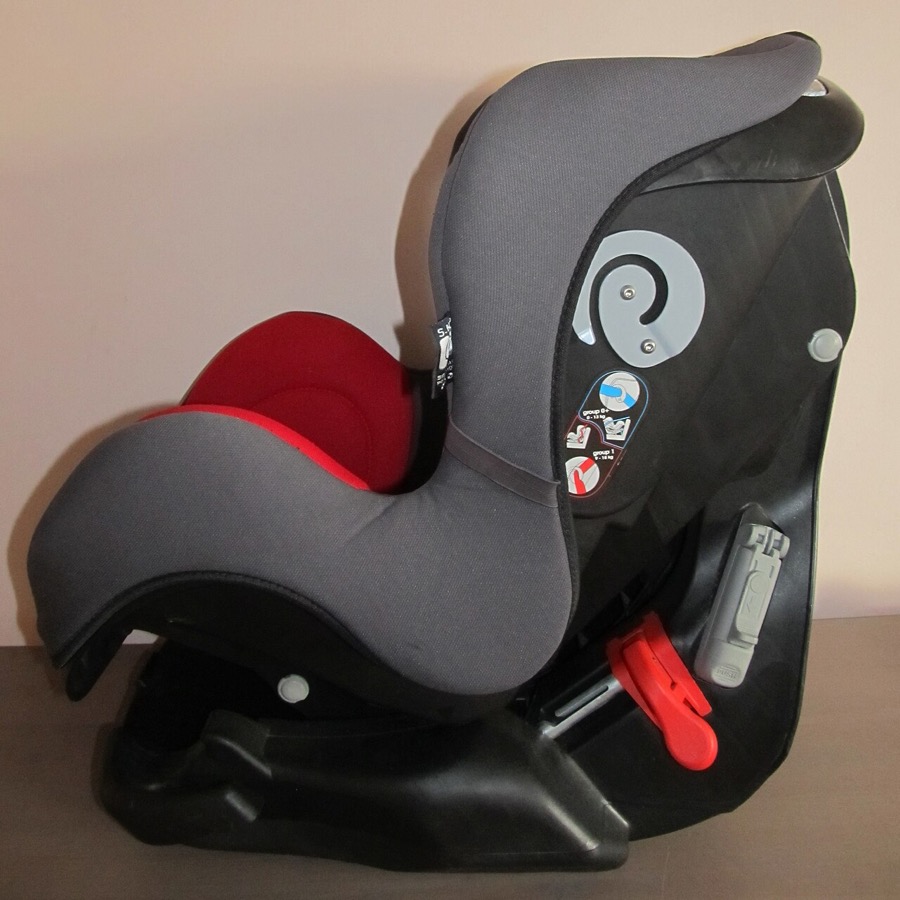
A baby cooked to death in the back of an SUV. The woman paid to watch her is at home with an ankle bracelet.
I read about this case in a piece framed around the injustice being done to Rhonda Jewell. I want to be careful here, because I am about to disagree with that framing in the strongest terms available to me, and the only way to do that honestly is to lay out the facts first and let them sit.
What happened
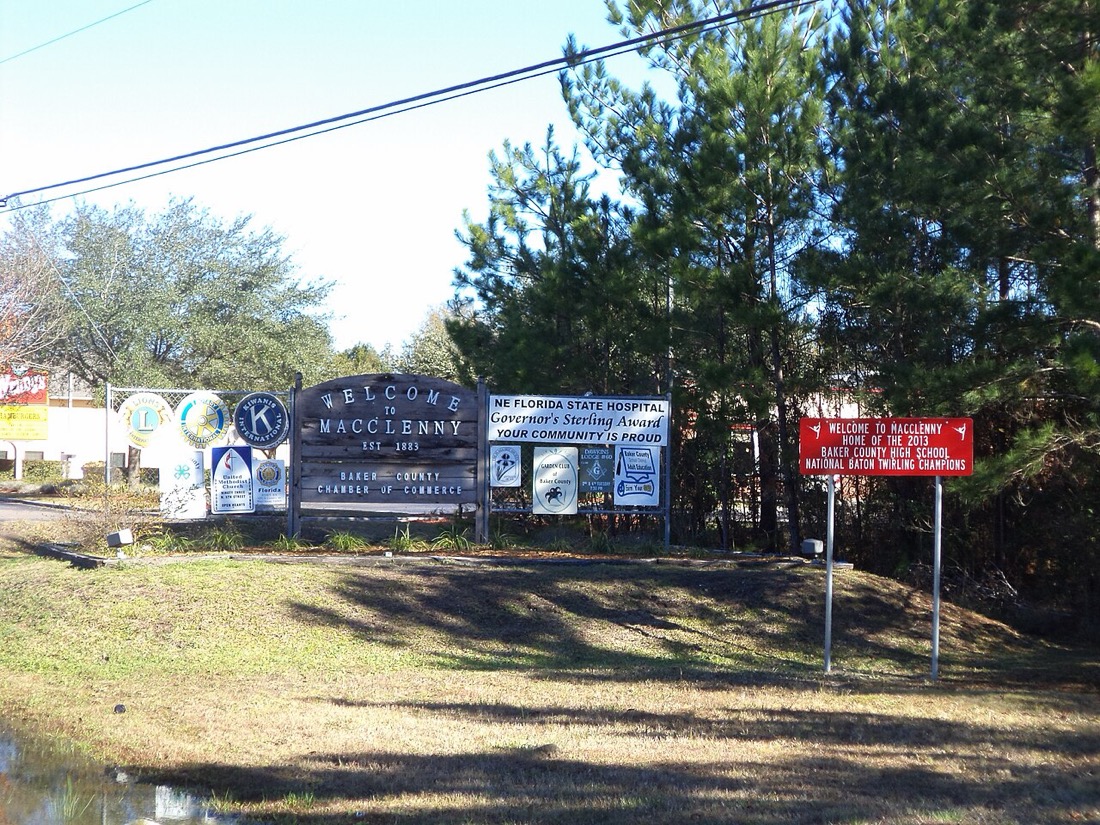
On 19 July 2023, in Baker County, Florida, Rhonda Jewell — now 49 — was being paid to look after Ariya Paige, ten months old. She drove home with Ariya in a rear-facing car seat in the back of her SUV. She parked. She went inside her house.
She left the baby in the car.
Five hours later, Ariya's mother arrived to collect her daughter. That is the moment Jewell remembered. From her own testimony at trial:
“I forgot the baby in the car… and I ran to the car and I opened up the door and she was still there.”
It was 98 degrees outside. The interior of the SUV was measured at 133 degrees. The medical examiner ruled the cause of death hyperthermia. Ariya's body temperature was still above 100 degrees at the hospital, after they had tried to cool her down.
The mother did not merely get bad news. She found her.
“The image of Ariya the day I found her will never get out of my head.”
— Brooke Paige, Ariya's mother
The physics are not ambiguous
There is a temptation, when a case turns on the word “forgot,” to treat the death as a freak outcome — a terrible roll of the dice. It was not. A car in the Florida sun is not a place where a baby might die. It is a place where a baby will die, on a schedule you can plot.
That study parked a dark sedan in full sun on 16 cloud-free days and logged the interior temperature every five minutes for an hour. Its central finding: 80% of the total temperature rise happens in the first 30 minutes. Cracking the windows open an inch and a half made no meaningful difference. Even on the coolest day they tested — 72°F — the inside of the car reached 117°F.
An earlier study cited within it is closer still to Ariya's day. At an ambient temperature of 98.2°F, King et al. found that 75% of the maximum heat rise occurred within five minutes, and the interior maxed out within fifteen minutes at between 124 and 153°F. The 133°F measured in Jewell's SUV falls squarely inside that band.
So let us be precise about the timeline. That vehicle was hot enough to kill Ariya Paige somewhere in the first half hour. It then stayed that way for another four and a half hours, while the only adult responsible for her was inside the house, not thinking about her.
Vehicular heatstroke kills roughly 37 American children every year — about one every ten days — and has killed more than a thousand since 1998. Heatstroke sets in when core body temperature hits about 104°F. Around 107°F, it kills you. Ariya was ten months old, strapped into a rear-facing seat, unable to unbuckle herself, unable to open a door, unable to do anything at all except get hotter.
What the jury did
Jewell was originally charged with aggravated manslaughter of a child. Days before trial, the State — State Attorney Brian Kramer — added two counts: leaving a child unattended in a motor vehicle, and third-degree felony murder.
In November 2024, the jury acquitted her of aggravated manslaughter and its lesser-included offences. It convicted her of third-degree felony murder and of causing great bodily harm to a child by leaving her unattended in a vehicle.
In December 2024 she was sentenced to 15 years on the murder count and 2 years consecutive on the neglect count. Seventeen years. The State had asked for twenty. She is parole-eligible at fourteen.
Ariya's father, Justise Paige, testified about the milestones he would not get:
“Instead of planning Ariya's first birthday, we had to plan her funeral.”
Jewell, to the family, at sentencing: “My heart is broken. My heart is broken for Ariya's parents, aunts and uncles. The person they once knew, loved and trusted has let them down. I take full responsibility.”
Hold onto that last sentence. It is going to matter.
Where she is right now
Not in prison. Rhonda Jewell was granted bond pending appeal and is living in Baker County under a curfew, wearing an ankle monitor she pays roughly $400 a month to wear.
Her appeal is being run by the MacArthur Justice Center and the Southern Poverty Law Center, with supporting amicus briefs from the Sentencing Project, a group of law professors, and Kids and Car Safety. That is a formidable amount of legal firepower, and it is aimed at one thing: undoing the seventeen years.

What the appeal actually argues
I am going to state their case as strongly as I can, because a position you cannot state fairly is a position you have not beaten.
Third-degree felony murder means a death that occurs during the commission of some other felony. Here, the other felony was leaving a child unattended in a motor vehicle — and the trial court ruled that this underlying felony required no proof that she knew the child was there. Strict liability.
Stack those together and you get the appeal's argument: Jewell was convicted of murder without any jury finding that she possessed a culpable mental state about anything. They point to Mahaun, Florida precedent holding that a felony-murder conviction cannot constitutionally rest on a felony carrying no intent requirement. And they point at the verdict itself as proof of the absurdity — the same jury that convicted her of murder had just acquitted her of manslaughter, which is to say it declined to find she was even criminally negligent.
Written down that baldly, it looks strange. I will grant that freely.
And the human half of their case deserves the same fairness. “Forgotten baby syndrome” is a real, documented phenomenon. It is not a lawyer's invention. It has happened to doctors, to professors, to devoted parents with no history of anything. The mechanism — habit memory overriding prospective memory when routine changes — is well described in the literature. Memory is not a moral organ. It fails people who love their children.
And here is why none of it saves her
Because Rhonda Jewell was not a parent on autopilot on the way to work.
A parent driving to the office has forty things in their head, and childcare is one of them. That is the scenario forgotten-baby-syndrome research is built on, and it is the scenario that earns genuine mercy. It is not this one.
Jewell had one job. Not one job among many — one job. She was being paid, that day, for the single task of keeping Ariya Paige alive and well. The baby was not incidental to her errand. The baby was the errand. She was in the middle of performing the only duty she had, and she performed it so badly that the child in her care died in a metal box in the driveway.
You cannot forget the entire content of your job and then offer the forgetting as your defence. “I lost track of the thing I was hired to keep track of” is not a mitigation. It is a confession, stated precisely.
And this is the part that should end the discussion: five hours. Not five minutes. Not a wrong turn, not a phone call, not a distraction at the school gate. Five hours in a house, with a baby dying in the vehicle outside, and not once in three hundred minutes did the woman being paid to mind that baby wonder where she was. She did not remember at hour one. Or two. Or three. Or four. She remembered when the mother knocked.
On the felony murder doctrine, which is not the villain here
The appeal treats it as an outrage that she was convicted of murder without proof of intent. But that is not a bug in felony murder. That is the entire doctrine. It exists precisely to say: when you commit a felony and somebody dies as a result, the law will not stand there and interrogate whether you meant for them to die.
Florida made leaving a child unattended in a car a felony because children die in hot cars every ten days in this country. The legislature was not being whimsical. It looked at a pile of small coffins and decided this specific act is dangerous enough to be criminal on its own terms — and a strict-liability standard is not an accident of drafting either. It is the point. “I didn't realise she was in there” is the only thing anyone ever says in these cases. A statute that accepted it as an excuse would be a statute that never applied to anybody.
If the First DCA wants to hold that Florida cannot build felony murder on a strict-liability predicate, that is a legitimate question of state constitutional law and appellate judges get paid to answer it. I am not pretending to be one. But let us be clear about what is being sought and what it would mean: an argument that the death of Ariya Paige should carry no murder liability at all, because the woman responsible was not paying enough attention to form an intent.
Rewarding inattention with immunity is a strange thing to call justice.
The standard
Here is mine, and I do not think it is complicated.
If your job is taking care of kids, and one of them dies in your care, you did not do your job. Not “you had a hard day.” Not “anyone could have.” You had one responsibility, the responsibility was a living child, and the child is dead. Everything else is commentary.
People who take on the care of the helpless take on a heavier standard than the rest of us. That is not cruelty; it is the whole reason the job means anything. We hand infants to strangers on the strength of it. Anaesthetists, pilots, lifeguards, nurses — every profession where a lapse of attention kills someone is a profession where the law and the licensing board come down like a hammer, and nobody thinks that is unfair. Nobody argues the pilot should walk because he did not intend the mountain.
Jewell said it herself, in open court, before anyone was asking her to: I take full responsibility. Seventeen years is what full responsibility costs. Her lawyers are now in front of the First District Court of Appeal arguing it should cost considerably less.
A jury of her neighbours in Baker County heard the evidence and convicted her. A judge sentenced her below what the State asked for. That process worked. It should be allowed to stand.
Ariya Paige was ten months old. She could not unbuckle a harness, open a door, or call out to anyone who would hear her. She did not get an appeal, or a bond hearing, or an ankle monitor, or a curfew in her own home. She got five hours at a hundred and thirty-three degrees, and then she got a funeral instead of a first birthday.
Serve the seventeen.
Sources
- HuffPost — Florida hot car death, Rhonda Jewell, felony murder
- News4JAX — Baker County babysitter sentenced to 17 years
- First Coast News — conviction and sentencing
- Action News Jax — granted bond pending appeal
- MacArthur Justice Center — Rhonda Jewell v. State of Florida case page
- Appellant's reply brief, First District Court of Appeal (PDF)
- Northeastern Law — Prof. Aliza Hochman Bloom amicus brief
- McLaren, Null & Quinn, “Heat Stress From Enclosed Vehicles,” Pediatrics 116(1):e109 (2005) (PDF)
- NHTSA — Child Heatstroke Prevention
- Kids and Car Safety — heatstroke studies and annual fatality data